Best Time to Visit the Sahara Desert in Morocco (Month-by-Month Guide)
Sahara weather swings dramatically between sunlit afternoons and starlit nights. Here is how each season feels in Erg Chebbi and Zagora so you can time your private tour well.
Key Planning Takeaways
- Peak comfort windows for the Moroccan Sahara are March to May (spring) and late September to November (autumn).
- Winter (December to February) offers bright, crisp sunny days ideal for hiking and photography, paired with very cold desert nights.
- Summer (mid-June to August) brings intense midday heat in Merzouga—best handled with slower pacing or swapped for Essaouira and High Atlas escapes.
- Because desert temperatures fluctuate steeply after sunset, smart layering matters in almost every season.
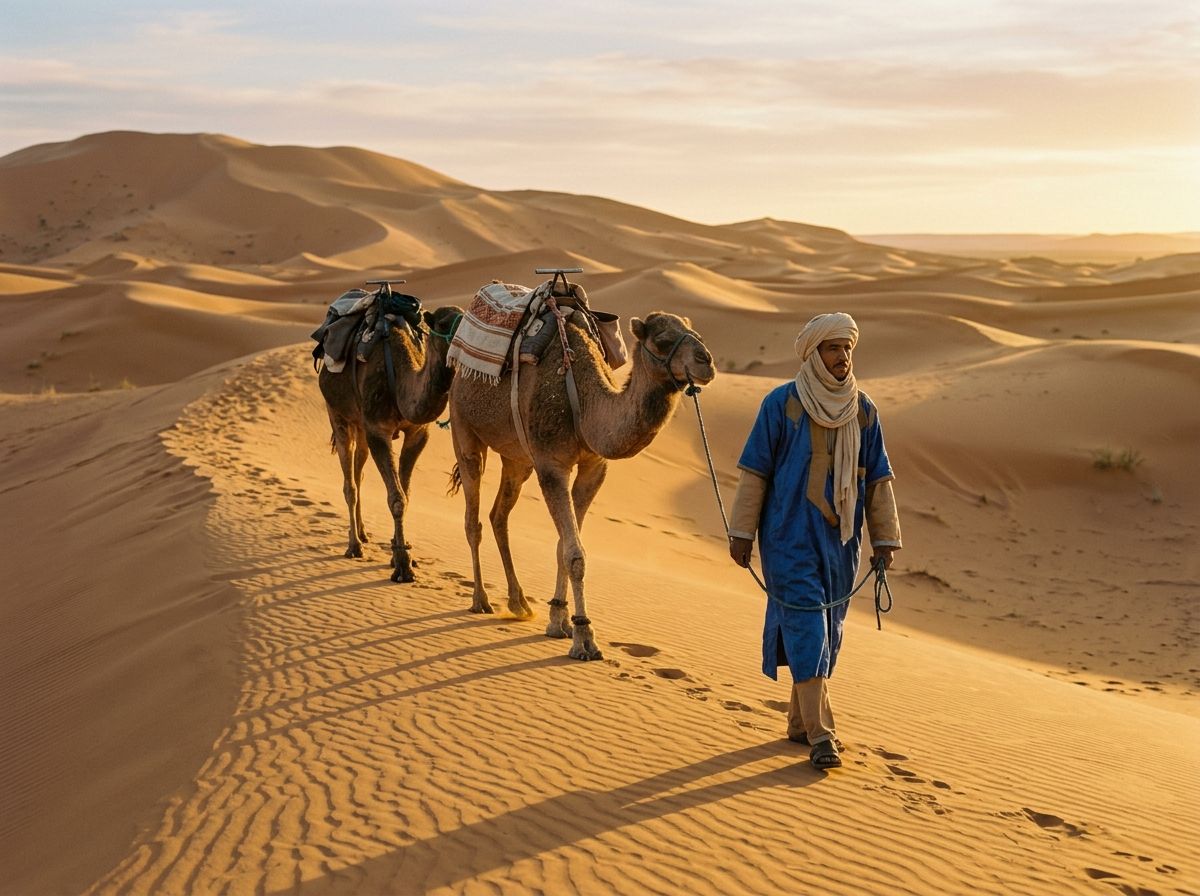
When travelers ask for the single best time to visit the Sahara Desert in Morocco, our honest answer starts with a simple truth: the Sahara is enjoyable for nearly nine months of the year, provided you know what each season actually feels like on the ground.
Spring (March to May): Golden Balance
Spring is widely considered Morocco’s finest overland window. Daytime temperatures in Merzouga typically sit comfortably in the low-to-mid 20s°C (70s°F), while evenings cool gently to sweatshirt comfort. Across the High Atlas Mountains, snow still dusts the highest peaks above green terraced valleys, and in late April and May the Valley of Roses blooms along your route to the dunes.
Note: Occasional windy days can kick up light desert dust in spring, so a scarf and sunglasses remain indispensable.
Autumn (Late September to November): Warm Days & Clear Skies
From late September through November, summer heat retreats and skies turn extraordinarily clear—producing some of the year’s sharpest desert sunsets and brightest stargazing nights. October is especially sought after across Morocco, so reserving intimate luxury desert camps and boutique kasbahs well ahead is wise.
Winter (December to February): Crisp Sunshine & Cold Nights
Do not overlook winter in the Moroccan Sahara. While northern Europe and North America endure grey skies, Erg Chebbi enjoys bright, dry blue-sky afternoons around 16–20°C (60–68°F)—ideal for long walks across the sand ridges.
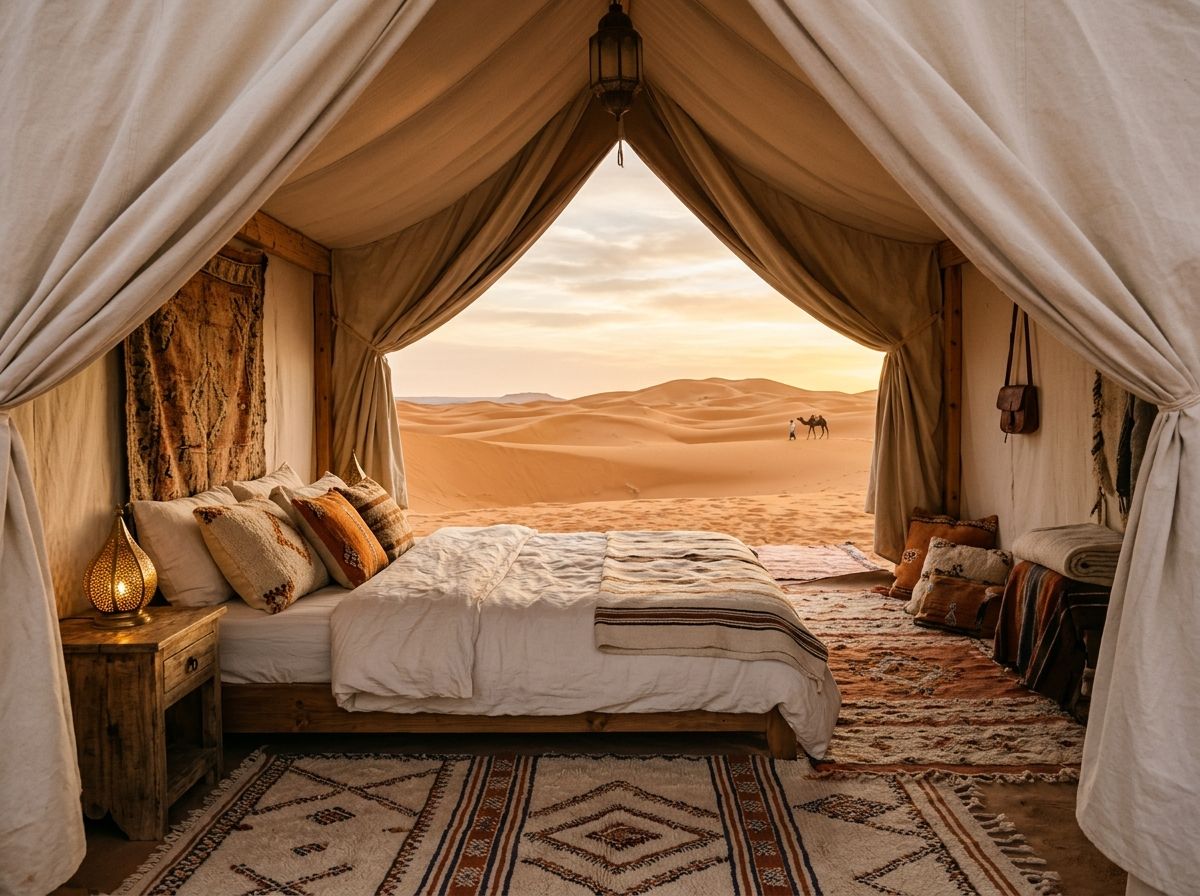
The catch is nighttime: once the sun drops, temperatures can fall toward 2–5°C (35–41°F). Well-equipped private desert camps supply thick woven wool blankets and cozy layers, and packing thermal base layers and a warm down jacket turns winter desert evenings into something deeply cozy.
Summer (June to August): High Heat & Smart Adjustments
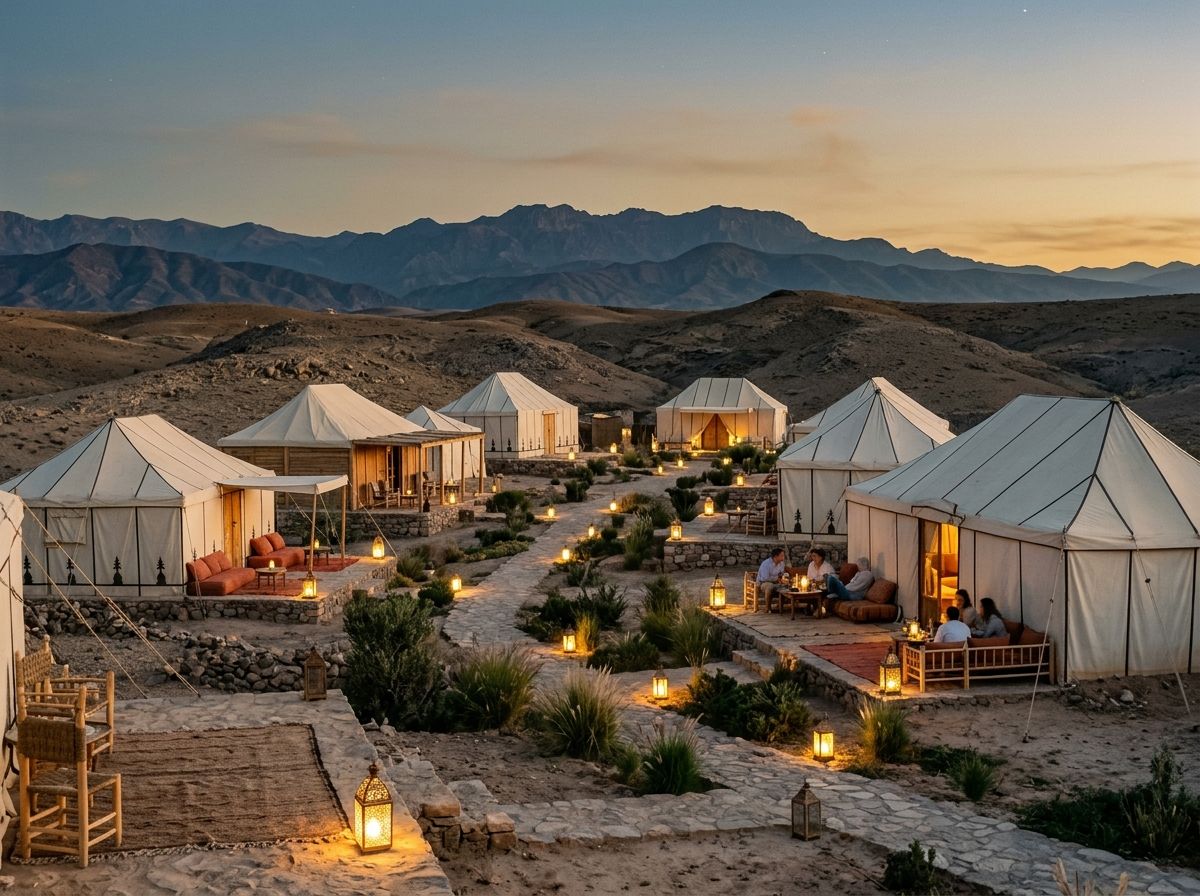
By mid-June through August, midday temperatures in Merzouga routinely exceed 40°C (104°F). While private air-conditioned vehicles and early-morning/late-evening pacing make desert visits possible for heat-tolerant travelers, many summer visitors prefer shorter desert tastes like sunset dining in Agafay paired with cool retreats in Imlil (High Atlas) and breezy Essaouira.
Quick Seasonal Summary
- Best overall comfort: March, April, May, October, November.
- Best for quiet dunes & crisp photography: December, January, February (pack warm evening layers).
- Best for mountain & coastal focus: June, July, August.